


PRIX : Agence Jésus et Gabriel (paris) pour Métrobus


GRAND PRIX : Agence Altmann + Pacreau (Paris) pour M. Moustache


Avec All au Guggenheim en 2011, on pensait que « tout » avait été dit. Comme souvent avec Maurizio Cattelan, nous étions sur une fausse piste…
Ce qui devait être le salut final d’une carrière éblouissante, faite d’œuvres qui ont marqué l’époque, de scandales, de profondeur, de fracas et d’humour, n’était qu’une (ir)révérence de plus.
Cinq ans plus tard, Cattelan revient au travail. Il a choisi la Monnaie de Paris pour son exposition la plus importante en Europe, et la plus importante depuis sa rétrospective New-Yorkaise.
Cinq ans plus tard, Cattelan revient au travail. Il a choisi la Monnaie de Paris pour son exposition la plus importante en Europe, et la plus importante depuis sa rétrospective New-Yorkaise.
Cette exposition à la Monnaie de Paris, sous le commissariat de Chiara Parisi, est une exposition qui sera profondément « habitée » par Cattelan. Un choix d’œuvres, dont l'image reste pour toujours accrochée à la rétine, seront exposées dans les salons XVIIIème siècle de la Monnaie de Paris.
Texte : monnaiedeparis
MON AVIS : Super expo, mais super courte !


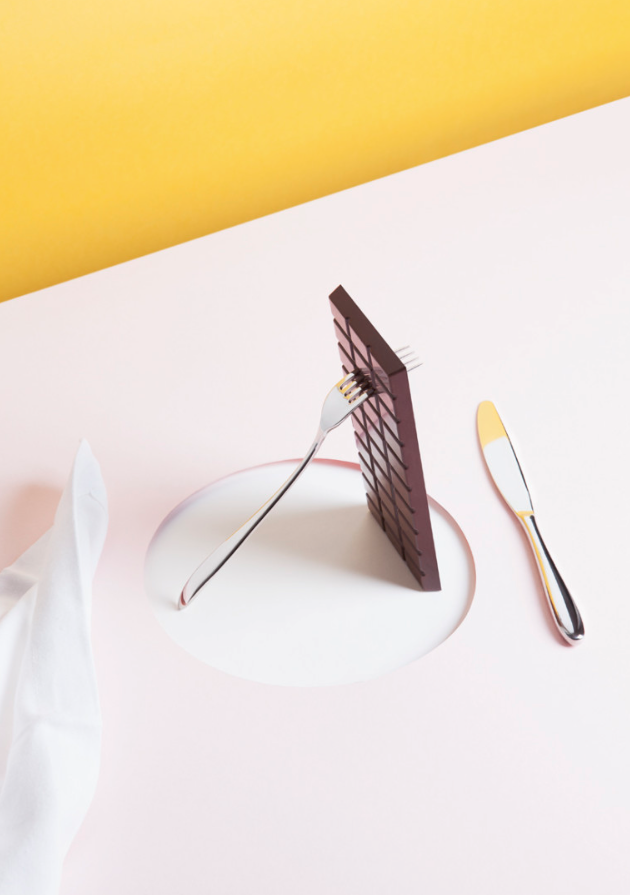

A surreal cookbook on the most heavenly way to enter the afterlife
When science meets art and humour in the kitchen
Theobromine is a subtle toxin found in cocoa. It is responsible for the good mood and stamina that chocolate brings to its eater. Overdosing on it though, can lead to chocolate poisoning. Dogs, well-known for their sweet tooth, are likely to bite the dust with a single bar of chocolate, whereas humans need a little more feasting on. We calculated that the deadly dose for an average-weight British adult can be reached when 7.74 kg of dark chocolate with 70% cocoa content are consumed within 24 hours... Time to indulge.
http://killyourselfwithchocolate.com


The Meerrors project by photographer Leonardo Magrelli reveals what mirrors reflect when no-one is stood in front of them. Quite simply, the premise shows a view that exists on the edge of possibility and Leonardo places the viewer where they physically can’t be. The images are a play on traditional portraits and still life pictures – presenting a reality with out any alterations, something Leonardo describes as “the cancellation of the self portrait.” “It’s an exploration of the sensation of unease that some people – me included – feels in front of a camera,” says Leonardo. “A discomfort that less and less people experience today, in the era of selfies, and that probably comes when we look at our own image, in which not always we can fully recognise ourselves.”
“What really interests me is the possibility and the boundaries of digital photography,” says Leonardo. “I’m far from being a purist of analogical photography, and I’m against the demonization of the digital one. I think that a medium should be studied and used to express or show things that no other medium can say.”
The images are taken in bathrooms, bedrooms, public conveniences, photo studios and more. The composition and framing of each creates a disconcerting reality where the eye is drawn to where the photographer or the camera should be, but is instead presented with a stillness. “I made several attempts to finally define a method to make me disappear from those mirrors,” explains Leonardo. “For the photoshop users I can guarantee that it was not a mere clone-stamp job! It was a much more photographical approach. A magician should never unveil his tricks, but I had to take different shoots each time, and mount them really meticulously.”
Leonardo has started working with curator Alessandro Tini to find an exhibition space for the Meerror series and had just embarked on a new project that investigates family portraits.
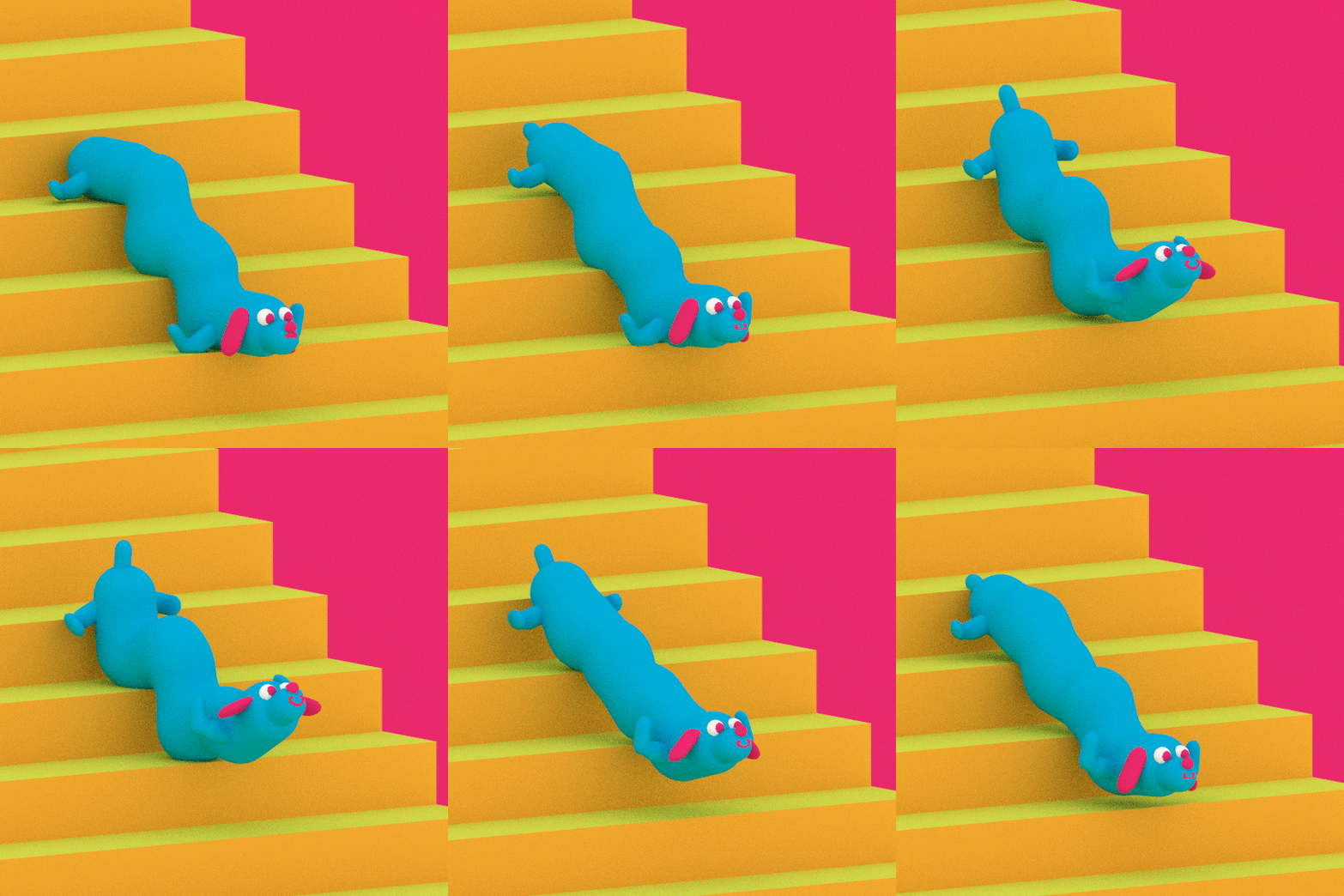
Les pensées confuses de James Franco déclinées sous forme de film d’animation, des vidéos musicales interactives avec une touche punk, des reprises de Jamie xx en GIF : tel est l’univers de Julian Glander, artiste numérique new-yorkais de 25 ans.
Texte & site : tracks.arte.tv


« Paris est une fête », disait Hemingway ; en voici la preuve avec ces clichés inédits, datant d’il y a 100 ans. C’est Albert Kahn, riche banquier français, qui se lance dans un projet un peu fou, celui d’immortaliser, grâce à l’autochrome des frères Lumière, les plus grandes métropoles du monde. Il engage quatre photographes, Léon Gimpel, Stéphane Passet, Georges Chevalier et Auguste Leon, qui sillonneront la capitale : nous découvrons ainsi la Ville Lumière d’il y a un siècle, mais aux couleurs d’aujourd’hui. Les photographies sont visibles au musée Albert Kahn, à Boulogne-Billancourt.
Texte & site : Written by
Katia fubizMON SITE PRO
Popular Posts
-
 Le projet Food Not Food reprend des plats et des boissons classiques et les recrée à l’aide d’objets du quotidien. Ici, un burger en ép...
 -
 On reproche parfois aux marques de luxe d’avoir une communication visuelle trop silotée qui tend parfois vers l’uniformisation des élément...
 -
 Tony Futura est un artiste berlinois qui détourne les icônes de la pop culture et les objets du quotidien en créations surréalistes, color...
 -
 February is one of the most romantic times of the year. St Valentine’s Day is coming and everything around gets filled with hearts, couple...
 -
 From Jin-wook Hwang Seedbomb is a non-military bomb that protects earth from worsening desertification and lessens sandstorms. After The 2nd...
 -
 Portail regroupant de bon lien dans différents domaines. De photoshop et des psd à télécharger ou des sites de typos "free"... et...
 -
 Vincent Ferrané’s Milky Way series captures the intimate moments of his wife and child during breastfeeding Milky Way is a series...
 -
 An ongoing personal project of intimate self-portraits shot by Italian photographer Sofia Masini. Born in 1991, Sofia Masini is an Ita...
 -
 MediaMonks was approached by Sirin Labs to create a rich interactive experience for the launch of Solarin – a high performance smartph...

PAGES VUES
Archives du blog
- ► 2012 (368)
- ► 2011 (236)
- ► 2010 (513)
- ► 2009 (228)